MFG Day 2026 

Powering the Next Era of American Manufacturing

The next era of American manufacturing will take more than investment. Workers, businesses, educators, and communities all have a role to play.

America’s Future Depends on What We Can Make

Our Manufacturing Day 2026 film connects America’s industrial history with the choices shaping its future. Explore why bringing production home is only the beginning, how access to real work creates opportunities to learn and advance, and how workers, businesses, educators, and communities can strengthen American manufacturing.

Read the transcript (PDF)
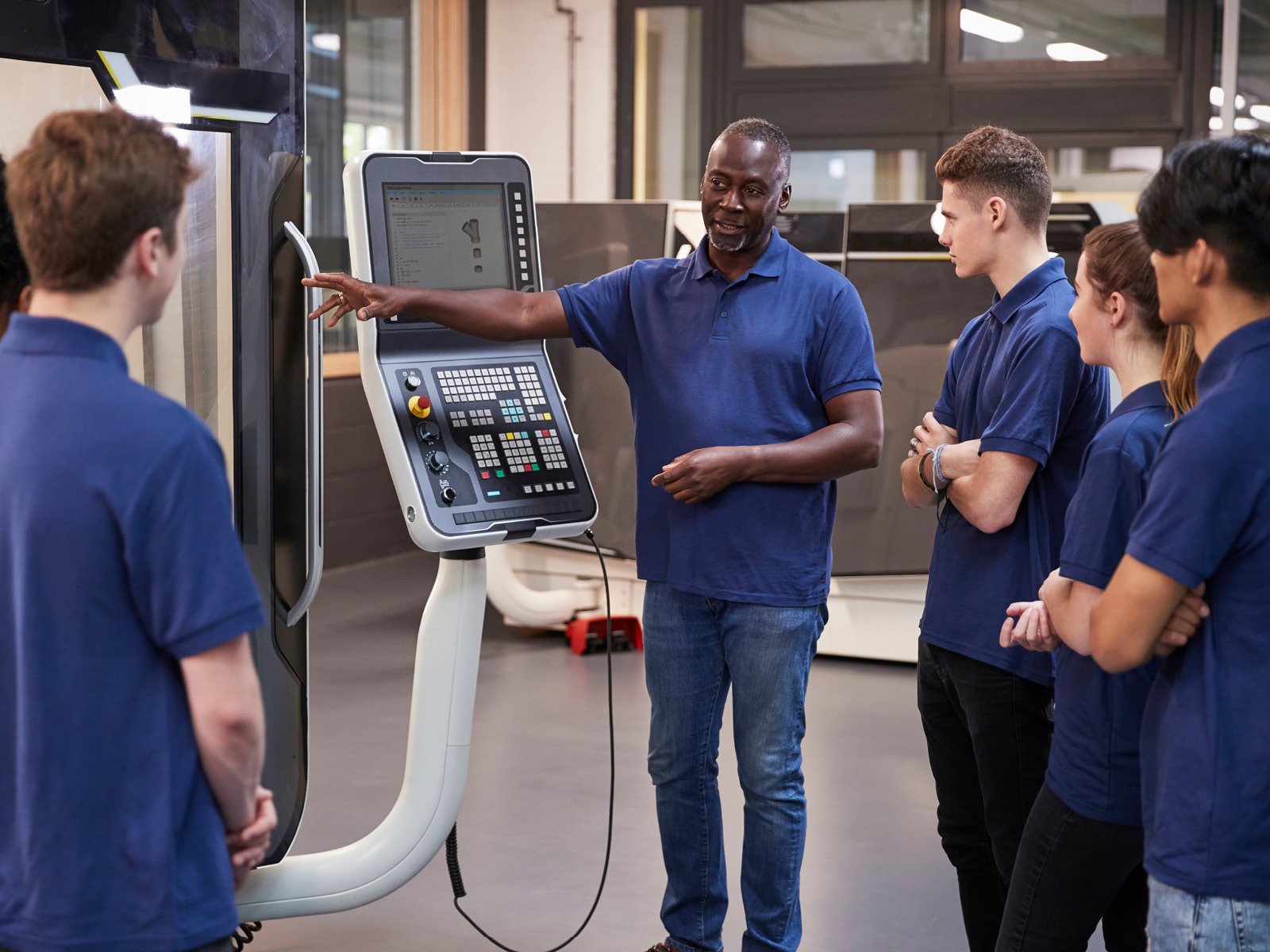
Instructor demonstrating a CNC machine to a group of learners
MFG Day 

Helping More People See a Future in Manufacturing

Manufacturing Day (MFG Day) gives students, parents, educators, and communities a firsthand look at modern manufacturing and the careers it offers. An initiative of the Manufacturing Institute, MFG Day 2026 takes place on Friday, October 2, with events continuing throughout the month and beyond.

Seeing how products are made and meeting the people who make them can give visitors a clearer understanding of the skills manufacturing requires and the opportunities it creates. For students and job seekers, it can be a first step toward a career they had never considered.

Explore MFG Day Resources -->
America 250

Manufacturing Is a Foundation of American Independence

In 2026, America marks 250 years since the Declaration of Independence. Generations of manufacturers and workers helped sustain that independence by producing the materials, machinery, and essential goods the country needed to grow and defend itself.

That capability rests on workers’ experience, manufacturing knowledge, and networks of domestic suppliers built over generations. Carrying it forward means developing people, passing on that knowledge, and rebuilding the capacity to produce what the country needs.

Explore 250 Years of American Manufacturing -->

“Not only the wealth, but the independence and security of a country, appear to be materially connected with the prosperity of manufactures.”
Alexander Hamilton
Report on Manufactures, 1791
The Challenge Ahead

Manufacturing’s Next Era Requires More Than New Facilities

American manufacturing is already struggling to replace the experience it is losing to retirement. Investment in new facilities and production lines is placing additional demands on a workforce pipeline that has not kept pace. Supporting that expansion means developing the workforce for new production while passing on the process knowledge that existing operations depend on.

Up to
3.8 million

U.S. manufacturing roles that could need to be filled between 2024 and 2033.

Up to
1.9 million

Roles that could remain unfilled if workforce challenges persist.

Source: Manufacturing Institute and Deloitte, 2024
The Path Forward

The Industry Has to Develop the Talent It Needs

When every opening requires experience on the same equipment, the industry limits its own ability to develop new workers. Much of the knowledge a manufacturer needs is specific to its equipment, processes, and expectations, and workers acquire it through participation in the operation.

On the floor, reliability, safety habits, and the ability to learn become visible in a worker’s performance. That gives manufacturers a basis for identifying who is ready for more complex work and where to invest in advanced training.

Build Your Own Talent Pipeline -->
In Practice

Build a Path to Greater Responsibility

Create an Entry Point

Define the capabilities the work requires from the start and the knowledge workers can develop through instruction and experience. Familiarity with identical equipment should not be a universal prerequisite.

Build Experience Through Repeated Work

Give workers repeated opportunities to learn the operation and apply feedback. Evaluate reliability, quality, and process discipline over time to identify who is ready for further development.

Invest in the Next Step

Use demonstrated performance to guide investment in cross-training and advanced instruction. Match that development to the operation’s needs, expanding workers’ responsibilities as they demonstrate readiness.

Our Solutions Featured in the Film

On-Demand Labor

Creating an Entry Point Through Real Work

Our on-demand labor marketplace connects businesses with workers, called Operators, for short-term work opportunities. Businesses post the work they need done, Operators bid on opportunities that fit their skills and availability, and businesses select who to bring in.

Through that work, Operators can demonstrate their capabilities and learn the operation. Manufacturers gain a basis for deciding who to invite back, where to provide additional training, and when someone is ready for greater responsibility.

01

Post a Work Opportunity

Businesses post work opportunities, called Ops, specifying the work to be completed, required skills, and when and where it will take place. Operators review those details and choose whether to bid based on their capabilities, availability, and interest.

02

Select Operators

Businesses review bids and compare Operators’ experience, performance ratings, and relevant qualifications. They select the Operators best suited to the work and accept their bids, maintaining full control over who comes into their operation.

03

Rate Operators

After an Op is complete, businesses rate Operators on attitude, safety, and quality/proficiency. These ratings build a record of demonstrated performance, helping businesses evaluate future bids while giving Operators a way to establish their reputation across the marketplace.

04

Build Your Labor Pool

Businesses can add proven Operators to their Labor Pool and invite them back for future Ops. Repeated work builds familiarity with the operation’s processes and expectations, creating a sideline bench of trusted workers the business can draw from as needed.

Graph showing the relationship between labor capacity and changing demand.

Scaling Labor Capacity With Real-Time Demand

With a Labor Pool in place, manufacturers can build their core workforce around consistent production and adjust labor capacity for the work that varies by day, shift, or work area. They can scale with changing workloads, supporting production during busy periods and controlling labor cost per unit when volume falls.

That flexibility becomes especially valuable as manufacturers take on new customers or expand production. They can support the work as it develops without committing to fixed labor costs based on projected volume alone. This gives them room to pursue growth while protecting delivery commitments and margins, connecting the responsiveness modern manufacturing requires with the economics that make expansion sustainable.

Respond to Demand Surges

Deploy proven Operators in as little as a few hours to handle sudden increases in production volume and protect delivery commitments.

Clear Backlogs

Deploy Operators where work has accumulated to clear production and shipping backlogs before more orders fall behind.

Keep Specialists Focused

Use Operators for support work so specialists can focus on the processes that truly require their expertise.

Handle Special Projects

Support sorting, inspection, and rework without diverting the core workforce from planned production or relying on overtime.

Support Production Ramps

Add proven Operators to meet temporary labor needs as new production lines, products, or processes are introduced.

Cover Unplanned Absences

Bring back familiar Operators when unexpected absences put daily production targets and customer commitments at risk.

Workforce Management

Connecting Workforce Planning to Daily Execution

Making effective use of that capacity starts with a coordinated plan for the entire workforce. Our Workforce Management platform connects production demand, scheduling, attendance, and performance in one system. Manufacturers can see what the work requires, how their workforce is being used, and where to adjust, helping them improve productivity and control costs as conditions change.

Build Labor Plans Around Production Demand

WFM calculates labor requirements by work area and shift from production demand and processing rates. Integrations with ERP, WMS, HRIS, and timekeeping systems bring data into the plan, showing where scheduled coverage falls short or exceeds requirements.

Adjust Coverage as Conditions Change

The plan incorporates time off, absences, shift changes, and clock-ins. Managers can adjust schedules, redeploy employees, or fill openings internally, with direct access to our on-demand labor marketplace when additional capacity is needed.

Track Productivity and Unit Costs

Real-time reporting tracks units per hour, labor cost per unit, and scheduled versus actual hours across shifts, departments, and facilities. Managers and leadership can use the same data to identify inefficiencies, guide adjustments, and evaluate results.

Explore Workforce Management -->
Workforce Management schedule dashboard showing daily allocated and needed hours for B2B, Ecommerce, and Shipping/Receiving categories across a week with shift details and variance indicators.
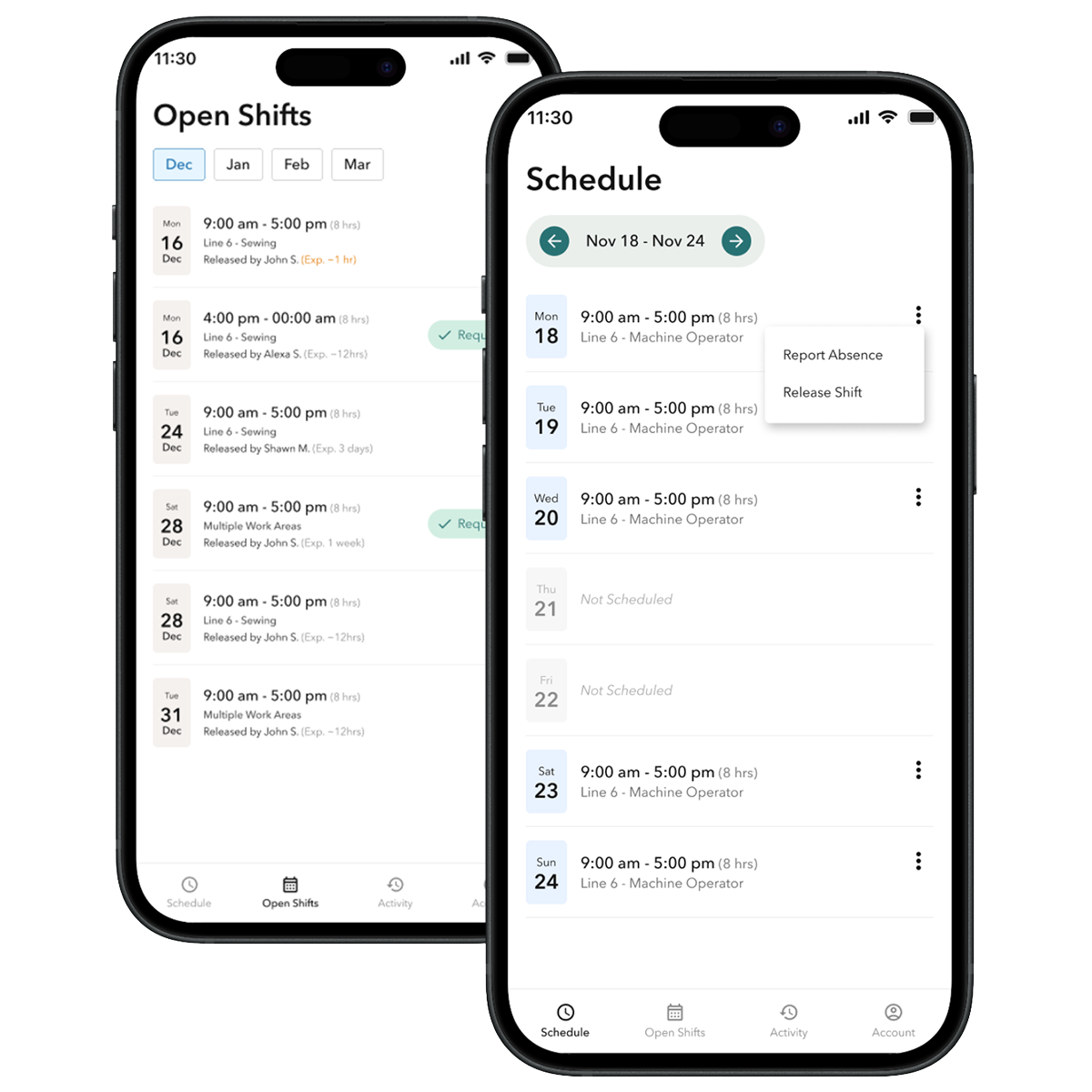
Two smartphone screens showing a work shift scheduling app with open shifts on the left and scheduled shifts on the right, listing dates, times, work lines, and job roles.
ShiftWorks Mobile App

Extending Flexibility to the Core Workforce

ShiftWorks gives frontline workers real-time access to schedules, shift updates, and absence reporting directly from their mobile devices. Employees can view upcoming shifts, release shifts they cannot work, and request time off without relying on manual coordination.

Managers maintain full visibility and control. Requests, shift releases, and coverage changes flow directly into Workforce Management, allowing them to review updates, approve changes, and maintain coverage without disrupting production.

Explore ShiftWorks -->
Veryable Vendor Network

Building a More Responsive Domestic Supply Chain

A manufacturer’s ability to meet demand also depends on its suppliers. The Veryable Vendor Network helps businesses find suppliers, compare capabilities, and request quotes in one place.

Because suppliers in the network use on-demand labor, they can respond faster and maintain reliable lead times, reducing the supply delays that can disrupt a manufacturer’s own production.

Explore the Veryable Vendor Network -->
Enabling The Next Era

Making American Manufacturing More Competitive

Manufacturers need a clear view of what production requires and the ability to respond quickly when those requirements change. Our platform connects workforce planning and employee coordination with on-demand labor and responsive domestic suppliers, helping businesses act on that information inside and beyond the facility. Together, these capabilities help manufacturers improve productivity and control cost per unit while adapting to changing customer requirements, making domestic production more competitive on speed, service, and cost.

Get Involved

Help Shape The Next Era of American Manufacturing

There are practical ways to strengthen manufacturing through the work you do and the people you reach. Put your experience to work, build a more responsive operation, connect education with opportunity, or help more people discover the manufacturers in your community.

For Workers

Put Your Experience To Work

Bid on short-term manufacturing and logistics opportunities that fit your skills and availability. Whether you’re seeking primary or supplemental income, our marketplace gives you a way to apply your experience across different operations and continue developing your skills.

Find Work Through Veryable -->
For Business Leaders

Build a More Responsive Operation

Build an operation that can compete on speed, service, and cost as your business grows. Our platform connects workforce planning, on-demand labor, and responsive suppliers to help you improve productivity, meet changing demand, and protect customer commitments.

Contact Us -->
For Educators

Connect Learning With Real Work

Work with local manufacturers to connect teaching and training with current equipment, processes, and skill requirements. Use Manufacturing Day visits to help students and job seekers understand the work, explore career paths, and see where their learning can lead.

Explore MFG Day Resources -->
For Communities

Champion Local Manufacturing

Help more people see the manufacturing happening around them. Share the film through your local networks, spotlight the businesses and workers behind products made nearby, and promote events that give your community a firsthand look at the industry.

Get Involved With MFG Day -->

When America Manufactures, America Wins

America’s ability to make things rests on the experience of its workers and the strength of its operations. Building that capability for the generations ahead is a responsibility we all share.